Use the Solar System as an operations board. A location tells you where contracts appear, how long a move costs, and which wider conflict you are entering.
Read the map in operating zones
The setting is divided into the Inner System, the Main Belt, the Outer System, and the Kuiper Belt. That layout is more useful than a flat place list because it turns the map into a route plan.
Mercury, Venus, Earth and the Moon, and Mars form the inner reference points. The belt adds scattered stations and contested asteroids. Jupiter and Saturn form the current outer logistics line; worlds beyond Saturn are planned for later updates.
- Use the map view to compare available operations with travel time before committing a clone.
- Treat moons and stations as their own operational spaces even when they belong to a planet's wider sphere.
- Check faction power before moving, since stations connect geography to campaign pressure.
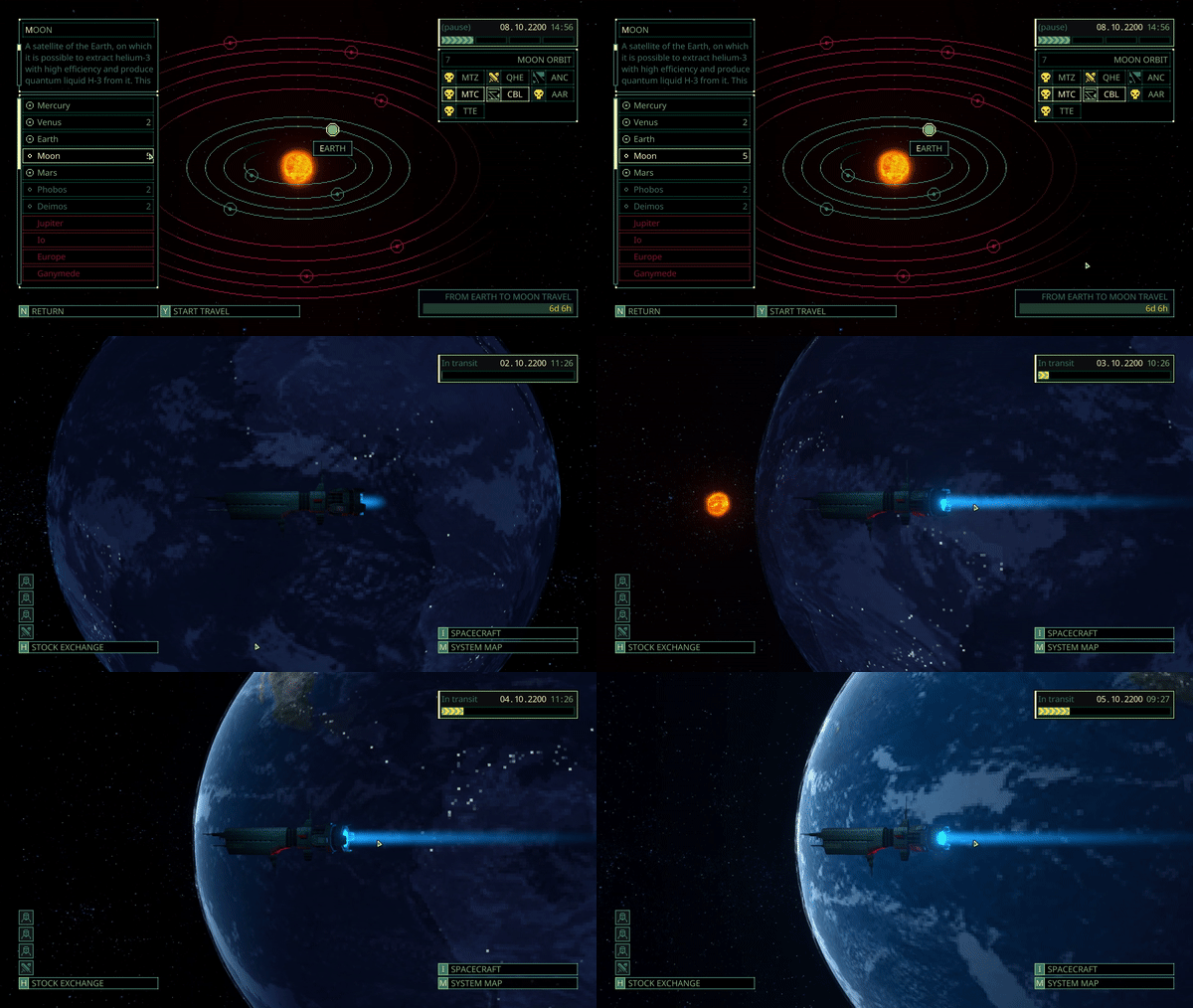
Let each destination change the question
The system ranges from Mercury's underground settlements and Venusian terraforming to the rough Martian frontier and the resource networks around Jupiter and Saturn. Those environments help set expectations for the kind of place a contract occupies.
A good route decision starts with three questions. Which faction benefits from the job, what does the objective change, and can the crew afford the time and wear required to get there and back.